
It’s clear you’re considering waterproofing your crawl space, but you’re also understandably concerned about the cost. Well, you’re not alone. The price tag can vary greatly based on numerous factors, and it’s crucial to understand where your money’s going. You’d be surprised how much labor costs can contribute to the final figure. But what about materials like sealants and sump pumps? And how can choosing a more advanced technique potentially save you money in the long run? There’s a lot to unpack here, let’s explore.
Key Takeaways
- Crawl space waterproofing costs depend on factors like size, existing water damage, type of waterproofing method, local labor rates, and crawl space accessibility.
- Material costs include sealants, French drain installation, sump pumps, insulation, and vapor barriers, with prices varying based on quantity and quality.
- Labor forms a significant part of waterproofing costs, influenced by regional rates and the complexity of the project.
- DIY waterproofing can be cost-effective for simpler tasks, but professional services offer quality assurance with warranties.
- To get competitive quotes, compare services and pricing from multiple contractors, look into additional costs, check reviews, and negotiate terms.
Understanding Crawl Space Waterproofing
When it comes to maintaining your home, crawl space waterproofing is an important aspect that you can’t afford to overlook.
It’s not just about preventing water damage; it’s about safeguarding the overall health of your house.
Water in your crawl space can lead to mold growth, which can cause health issues for you and your family. It can also cause structural damage to your home, which can be costly to repair.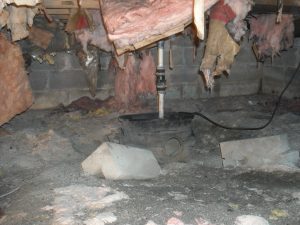
That’s why it’s essential to guarantee that your crawl space is properly waterproofed.
Now, you might be wondering, what exactly does crawl space waterproofing entail?
It’s a process that involves sealing off your crawl space from moisture. This can be done in various ways, including using a vapor barrier, installing a sump pump, or applying a waterproof sealant.
Keep in mind, though, that every home is unique.
The best waterproofing solution for your crawl space will depend on a number of factors, including the size of your crawl space, its current condition, and the climate in your area.
Factors Influencing Waterproofing Costs
Maneuvering the costs of crawl space waterproofing can seem overwhelming at first. But understanding the factors that influence these costs can help you make better decisions.
Three main factors weigh heavily on the overall cost. First is the size of your crawl space. Simply put, the larger the space, the higher the cost. Second, the extent of the water damage already present can affect the price. More damage may require more extensive work, which can increase costs. Finally, the type of waterproofing method you choose also has an impact. Some methods are more costly than others but may offer better protection.
To help you visualize this, consider the following table:
| Factor | Lower Cost Scenario | Higher Cost Scenario |
|---|---|---|
| Size of Crawl Space | Smaller spaces | Larger spaces |
| Extent of Water Damage | Minimal damage | Significant damage |
| Type of Waterproofing | Basic methods | More advanced methods |
Typical Waterproofing Cost Breakdown
Now that you’re familiar with the factors that can influence waterproofing costs, let’s break down the typical expenses you might encounter.
Understanding waterproofing quotations will be your first step.
We’ll also review the costs of essential waterproofing components and discuss some unexpected factors that could impact your final bill.
Understanding Waterproofing Quotations
To fully grasp the details of a waterproofing quotation, it’s vital to understand the typical cost breakdown. Each quote you receive will likely differ, as they’re based on your unique situation and the contractor’s evaluation.
However, there are common factors that you’ll see in almost every quote.
Labour costs make up a significant portion of the quote. It covers the time and effort put in by the crew to complete the waterproofing task. This can vary depending on the complexity of the job and the skill level required.
Materials are another key factor. The type and quantity of waterproofing products needed will greatly affect the overall cost. Remember, quality materials may cost more upfront, but they can save you money in the long run by reducing the need for future repairs.
Lastly, the quote may include miscellaneous costs such as permits, inspections, and cleanup. These are often overlooked but are an essential part of the process.
Essential Waterproofing Components Cost
Without a doubt, understanding the cost of essential waterproofing components is key to grasping the full picture of waterproofing expenses.
Let’s break down the major items that you’ll pay for.
The backbone of your waterproofing project is the sealant. This material keeps water out of your crawl space and prevents moisture buildup. Depending on the product’s quality and the size of your area, you’re looking at a range of $30 to $100 per gallon.
Next, you have drainage components. Installing a French drain, for instance, costs on average $20 to $30 per linear foot. A sump pump, which keeps your crawl space dry by pumping out water, will set you back between $300 to $600.
Insulation is another critical component. The price varies widely based on the type and thickness you choose, but expect to shell out $1 to $3 per square foot.
Lastly, vapor barriers help control humidity levels and cost around $0.15 to $0.50 per square foot.
Unexpected Cost Factors
While the core components of waterproofing your crawl space have a predictable price range, there are several unforeseen factors that can greatly impact your final bill.
You’re probably wondering, what exactly are these unexpected costs?
Firstly, the condition of your crawl space matters. If it’s severely damaged, extra repairs can inflate your budget. Structural issues, such as cracked walls or sagging floors, need addressing before waterproofing, resulting in additional expenses.
Secondly, accessibility can drive up costs. If your crawl space is hard to reach or unusually small, it’ll take more time, effort, and specialized equipment to waterproof. The extra labor hours and equipment rental can add a significant amount to your bill.
Thirdly, local regulations and permits can also affect the price. Every area has different building codes and permit fees. If your project doesn’t comply, you’ll have to pay for modifications and the corresponding permits.
Lastly, if any pests or mold are discovered during the process, you’ll have to pay for extermination or remediation services.
Benefits of Crawl Space Waterproofing
Investing in crawl space waterproofing offers you a host of benefits.
To begin with, it improves the overall air quality of your home. Moisture in your crawl space can lead to mold and mildew growth, which can affect the air you breathe. By waterproofing your crawl space, you’re eliminating that risk.
Another significant benefit is the protection of your home’s structural integrity. Water can be destructive. It can lead to wood rot and rust, which in turn can weaken your home’s foundation. Waterproofing your crawl space can prevent these issues, maintaining the strength and stability of your home.
It also helps in energy efficiency. A damp crawl space can affect the temperature of your home, causing your heating or cooling system to work harder. With a waterproof crawl space, you’re ensuring a more stable indoor temperature, reducing your energy consumption.
Lastly, it increases your property value. Having a waterproofed crawl space shows potential buyers that your home has been well-maintained, providing peace of mind and making your property more attractive.
It’s an investment that not only benefits you now but also in the future should you decide to sell. Consequently, crawl space waterproofing is an investment worth considering.
Potential Additional Expenses
Additional expenses may arise when waterproofing your crawl space. You’ll need to be prepared for these potential costs to avoid any financial surprises.
Firstly, if your crawl space has damage, such as cracks or structural issues, you’ll need to pay for repairs before the waterproofing can occur. This can greatly increase your overall cost.
In some cases, it might be necessary to replace wooden beams or supports, which could run into the hundreds, if not thousands, of dollars.
Secondly, your location can affect the cost. If your home is in a flood-prone area, additional measures may be required to guarantee proper waterproofing. This could include installing a sump pump or a French drain, which can increase your expenses.
Lastly, labor costs can vary greatly. It’ll depend on the complexity of the job, the size of your crawl space, and the rates of the professionals you hire.
Also, if the job requires special equipment or materials, you’ll pay extra for that too.
Tips to Reduce Waterproofing Costs
Looking to save on your crawl space waterproofing costs? You’re not alone. Here are a few tips that can help you reduce your expenses without compromising on quality or safety.
Firstly, don’t skimp on regular maintenance. It’s the best way to prevent serious issues from cropping up. By keeping your crawl space clean and ensuring it’s well-ventilated, you can prevent moisture buildup which can lead to costly repairs down the line.
Secondly, consider DIY solutions. There are plenty of products on the market that allow you to waterproof your crawl space yourself. But remember, DIY isn’t for everyone. If you’re not comfortable doing it yourself, it’s best to hire a professional.
Thirdly, look for competitive quotes. Don’t settle for the first quote you receive. Get estimates from several contractors and compare their rates and services. This can help you find the best deal.
So, you now understand how crawl space waterproofing costs work. Factors like the size of the area, existing damage, and your chosen method all play a part. While upfront costs might seem high, remember that long-term savings can be significant. Additional expenses may arise, but with savvy choices, you can manage your budget effectively. Armed with this knowledge, you’re ready to make a well-informed decision about your home’s crawl space waterproofing.

Since we are constantly working on damp crawlspaces and wet basements in the greater Indianapolis area, we are experts in structural floor repairs too. Whether you have sagging, bouncy, or unlevel floors, our solutions can help you.
Plus, we’re not only waterproofers, but we’re experts in structural floor repair. Whether you have foundation cracks, drywall cracks, or sagging floors, our structural repair specialists can help fix the problem. We’ve fixed hundreds of foundations and floor systems in homes and commercial buildings throughout the area.
Fixing your damp basements and crawlspaces before it becomes a big problem is the most affordable and effective option. You’ll avoid extra costly structural repairs and decreased home value. For our trained crawlspace technicians, a typical crawlspace repair usually takes less than a few days to complete. Many of our systems come with a warranty – so that you know the problem was fixed right. Give us a call us at 317-893-7016 to request a professional evaluation from our foundation repair experts.
**Lifetime Transferrable Warranties are for the lifetime of the home or 2 transfers of ownership. The CrawlDrain drainage system warranty guarantees no standing water in the crawl space. The sump pump is a 3 year parts and labor warranty. The CrawlSeal encapsulation system warranty guarantees the seams, sealants, and against rips or tears in the plastic. For more information about the warranties, request a copy of the warranty.