
For most Indiana homeowners, the crawl space is “out of sight, out of mind.” However, the most critical piece of lumber in your entire house sits right at the top of that dark, damp foundation wall: the sill plate. This horizontal beam is the transition point where your wood-framed house meets the concrete or block foundation. When it rots, the very skeleton of your home begins to compromise.
Because Central Indiana experiences high humidity and fluctuating water tables, our homes are uniquely susceptible to sill plate failure. At Indiana Crawl Space Repair, we’ve seen how a small patch of soft wood can turn into a $20,000 structural nightmare if left ignored. Here is how to spot the damage before it’s too late.
What is a Sill Plate and Why Does It Rot?
The sill plate is the first piece of wood installed on a foundation. Its job is to provide a level surface to anchor the floor joists and walls. In older Indiana homes, these were often made of non-treated oak or pine. Because they sit directly on masonry, they are prone to “wicking” moisture—a process called capillary action—where moisture from the soil travels up through the concrete and into the wood.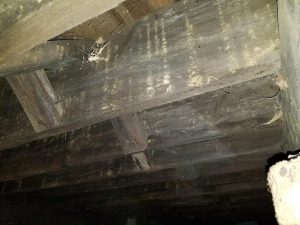
The Role of Indiana Humidity
In cities like Indianapolis and Martinsville, the “Stack Effect” pulls moist air into the crawl space. When this moisture condenses on a cold sill plate, it creates the perfect breeding ground for Serpula lacrymans (dry rot) or white-rot fungi. Over time, the wood loses its cellulose structure, turning into a soft, spongy material that can no longer support the weight of your home.
Red Flags: 5 Signs of Structural Sill Plate Damage
1. Gaps Between the Baseboard and the Floor
If you notice a visible gap opening up between your hardwood floors and your baseboard trim, it’s rarely just “settling.” When a sill plate rots, it compresses under the weight of the exterior walls. As the wall sinks, it leaves the floor joists behind, creating a gap that you can often stick a coin or even a finger into.
2. Sticking Doors and Windows
Does your front door suddenly stick in the summer? Do you have a window that won’t budge? While humidity causes wood to swell, a sinking sill plate tilts the door and window frames out of “square.” If the frame is no longer a perfect rectangle, the door will bind against the jamb.
3. Visible “Crushing” or Wood Discoloration
If you are brave enough to head into the crawl space with a flashlight, look at the wood sitting directly on the concrete. Healthy wood should be light-colored and hard. If the wood looks dark, “alligator-skinned,” or appears to be flattened/crushed by the joists above it, the structural integrity is gone.
4. Sagging or “Bouncy” Floors
The sill plate supports the ends of your floor joists. If the support at the end of the joist softens, the joist will dip. This results in a “trampoline” feel when you walk across the living room or kitchen.
5. Cracks in Exterior Brick or Interior Drywall
When the foundation’s wooden “shoe” (the sill) fails, the drywall above it is forced to flex. Look for diagonal cracks stretching from the corners of door frames or windows. On the exterior, “stair-step” cracks in brick mortar are a major indicator that the wooden structure beneath is shifting.
The ICSR Process: Professional Sill Plate Replacement
Replacing a sill plate is a surgical procedure for a house. At Indiana Crawl Space Repair, we don’t use “quick fixes.” Our process involves:
- Structural Shoring: We install temporary steel jacks to take the weight of the house off the damaged area.
- Sill Extraction: We carefully remove the rotted sections without disturbing the home’s exterior finish.
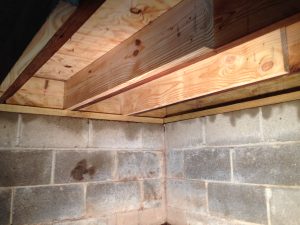
- Pressure-Treated Installation: We replace the old wood with Code-Approved Pressure-Treated Lumber and install a “sill sealer” (a foam gasket) to prevent future moisture wicking.

- Floor Leveling: Once the new wood is in place, we slowly lower the home back into its original, level position.
FAQ Section
Can I just “sister” a new board next to the rotted one?
No. Rot is like a cancer; if you leave the rotted wood in place and simply bolt new wood to it, the fungus will spread to the new board. The compromised wood must be removed to stop the cycle of decay.
How long does a typical structural repair take?
Most sill plate and rim joist repairs are completed in 2 to 4 days, depending on the accessibility of the crawl space and the linear footage of the damage.
Is this covered by my home insurance?
Most standard Indiana homeowners’ policies exclude “long-term seepage” or “rot.” However, if the rot was caused by a sudden pipe burst, you may have a claim. We provide detailed documentation to help you navigate conversations with adjusters.

Since we are constantly working on damp crawlspaces and wet basements in the greater Indianapolis area, we are experts in structural floor repairs too. Whether you have sagging, bouncy, or unlevel floors, our solutions can help you.
Plus, we’re not only waterproofers, but we’re experts in structural floor repair. Whether you have foundation cracks, drywall cracks, or sagging floors, our structural repair specialists can help fix the problem. We’ve fixed hundreds of foundations and floor systems in homes and commercial buildings throughout the area.
Fixing your damp basements and crawlspaces before it becomes a big problem is the most affordable and effective option. You’ll avoid extra costly structural repairs and decreased home value. For our trained crawlspace technicians, a typical crawlspace repair usually takes less than a few days to complete. Many of our systems come with a warranty – so that you know the problem was fixed right. Give us a call us at 317-893-7016 to request a professional evaluation from our foundation repair experts.
**Lifetime Transferrable Warranties are for the lifetime of the home or 2 transfers of ownership. The CrawlDrain drainage system warranty guarantees no standing water in the crawl space. The sump pump is a 3 year parts and labor warranty. The CrawlSeal encapsulation system warranty guarantees the seams, sealants, and against rips or tears in the plastic. For more information about the warranties, request a copy of the warranty.