
For many homeowners in historic Indianapolis neighborhoods like Irvington or Meridian-Kessler, a certain amount of “character” is expected. However, when that character manifests as sloping hallways, “bouncy” kitchen floors, or doors that suddenly refuse to latch, it is no longer a matter of charm—it is a sign of structural distress. Repairing sagging floors in Indianapolis requires more than just a surface-level fix; it demands a deep understanding of how Indiana’s unique climate and soil conditions interact with a home’s wooden skeleton.
At Indiana Crawl Space Repair, we specialize in identifying the root causes of floor failure and implementing permanent solutions using heavy-duty structural jacks and joist reinforcement. If you have noticed your home shifting, this guide will help you understand the “why” behind the sag and the “how” of the professional restoration process.
Signs Your Home’s Structural Integrity is Compromised
Structural issues rarely happen overnight. They are usually the result of years of gradual weakening. Because the crawl space is an area most homeowners avoid, the first symptoms of trouble usually appear in the living areas above.
Interior Cracks in Drywall and Door Frames
When floor joists beneath a wall begin to settle, they pull the wall studs down with them. This creates tension in the drywall, typically resulting in diagonal cracks emanating from the corners of door frames or windows. If you patch these cracks and they return, the “settling” is likely an active structural failure in your crawl space.
Sloping or “Soft” Spots in High-Traffic Areas
If you feel a “dip” as you walk across a room, or if furniture appears to lean toward the center of the house, your main support beams may be failing. In Indianapolis homes, this is often most noticeable in kitchens and bathrooms where heavy appliances and tile flooring put extra stress on the underlying wood structure.
Visible Rot on Floor Joists or Beams
If you venture into the crawl space and see wood that looks dark, “hairy” with fungal growth, or crumbles to the touch, you are dealing with wood rot. Once moisture levels in crawl space wood exceed 20%, the structural capacity of the lumber drops significantly, leading to the “bouncing” sensation many homeowners report.
The Root Cause: Why Indiana Floors Begin to Sag
Indiana’s environment is particularly harsh on crawl spaces. The heavy clay soil found throughout Central Indiana retains massive amounts of water, which creates high humidity levels beneath the home.
Excessive Moisture Weakening Wood Fibers
Wood is a natural material that expands and softens when saturated. In a vented crawl space, the constant influx of humid Indiana summer air causes the floor joists to lose their rigidity. Over time, the weight of the home causes these softened beams to “form” into a permanent sag.
Improper Support Post Spacing
Many older homes were built with support posts spaced too far apart, or with posts resting on “temporary” foundations like stacks of bricks or wood scraps. Over decades, these makeshift piers sink into the soft Indiana clay, causing the entire floor system to drop.
The Solution: High-Strength Adjustable Support Jacks
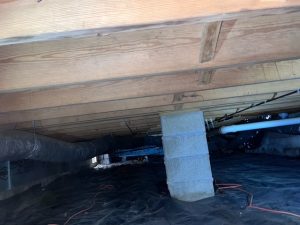 To fix a sagging floor correctly, you cannot simply add more wood. You need a solution that can be adjusted and that provides a stable connection to the earth. This is where professional structural jacks come into play.
Why Concrete Blocks and Wood Shims are Temporary
DIY fixes often involve stacking concrete blocks and using wooden shims to “tighten” the gap. However, as the moisture levels in the crawl space change, the wood shims compress or rot, and the concrete blocks can shift or sink. This results in the floor sagging again within a few seasons.
How Supplemental Steel Beams Distribute Weight Properly
Our approach involves installing high-capacity, supplemental steel beams held in place by adjustable structural jacks. We first pour a deep, reinforced concrete footer to provide a stable base. The steel jack is then tensioned against the beam. This allows us to not only stop the sagging but, in many cases, slowly lift the floor back toward its original level position over time, closing drywall cracks and realigning door frames.
Frequently Asked Questions
Is a sagging floor a sign of a foundation collapse?
Not necessarily. While it is a serious structural issue, it usually involves the internal “skeleton” of the home rather than the exterior foundation walls. However, if left unaddressed, the uneven weight distribution can eventually put dangerous stress on your perimeter foundation.
Can you level the floor back to its original position?
In many cases, yes. We use a “slow lift” process where we adjust the jacks over a period of time. This minimizes the risk of cracking drywall or damaging the home’s finishes while restoring the floor’s original plane.
Does insurance cover sagging floor repairs?
Most standard homeowners’ insurance policies do not cover damage caused by gradual wood rot or normal settling. This is why it is vital to address moisture and structural issues early before they become catastrophic and expensive failures.

Since we are constantly working on damp crawlspaces and wet basements in the greater Indianapolis area, we are experts in structural floor repairs too. Whether you have sagging, bouncy, or unlevel floors, our solutions can help you.
Plus, we’re not only waterproofers, but we’re experts in structural floor repair. Whether you have foundation cracks, drywall cracks, or sagging floors, our structural repair specialists can help fix the problem. We’ve fixed hundreds of foundations and floor systems in homes and commercial buildings throughout the area.
Fixing your damp basements and crawlspaces before it becomes a big problem is the most affordable and effective option. You’ll avoid extra costly structural repairs and decreased home value. For our trained crawlspace technicians, a typical crawlspace repair usually takes less than a few days to complete. Many of our systems come with a warranty – so that you know the problem was fixed right. Give us a call us at 317-893-7016 to request a professional evaluation from our foundation repair experts.
**Lifetime Transferrable Warranties are for the lifetime of the home or 2 transfers of ownership. The CrawlDrain drainage system warranty guarantees no standing water in the crawl space. The sump pump is a 3 year parts and labor warranty. The CrawlSeal encapsulation system warranty guarantees the seams, sealants, and against rips or tears in the plastic. For more information about the warranties, request a copy of the warranty.