
Does your hallway seem to slope slightly to one side? Does the living room floor bounce or feel unusually soft when you walk across it?
Sagging, uneven, or bouncy floors can be unsettling, but they do not automatically mean your home is facing catastrophic structural failure. In many Indianapolis homes, the real problem is hidden below the finished flooring—in the crawl space, where moisture, weakened floor joists, deteriorated beams, or inadequate support can affect the entire floor system.
The good news is that many of these problems can be corrected from beneath the home without removing hardwood, tile, or carpet above.
Understanding why floors sag, what warning signs to look for, and how structural repairs work can help you address the underlying problem before additional damage develops.
Signs Your Indianapolis Home May Need Structural Floor Repair
Sagging floors rarely appear without warning. Changes in the floor system can gradually affect doors, trim, cabinets, walls, and other parts of the home.
Here are several signs worth paying attention to.
1. Doors That Stick or Swing on Their Own
An interior door that suddenly rubs against its frame, becomes difficult to close, or swings open or shut without being pushed may indicate that the surrounding framing has shifted.
You may also notice cabinets separating slightly from the wall or countertops that no longer appear level.
These symptoms do not prove that you have a structural problem, but when they occur alongside uneven or sagging floors, the framing beneath the home should be inspected.
2. Gaps Between Floors and Baseboards
Look closely at the bottom of your baseboards.
A growing gap between the flooring and the baseboard can indicate movement in the floor system below. Instead of the trim moving upward, the subfloor and supporting framing may be settling or deflecting downward.
The larger or more widespread the gaps become, the more important it is to determine what is happening beneath the floor.
3. Bouncy or “Trampoline-Like” Floors
A properly supported floor should generally feel solid under normal use.
If the floor noticeably flexes, vibrates, or bounces when someone walks across the room, the joists or supporting beam may no longer have sufficient stiffness.
Several conditions can contribute to a bouncy floor, including weakened joists, excessive joist spans, deteriorated wood, or inadequate support beneath the floor system.
Why Do Floors Sag in Indianapolis Homes?
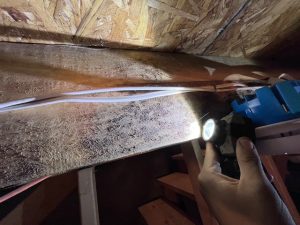 To understand sagging floors, it helps to understand how the weight of a home reaches the ground.
Loads from the walls and living areas are transferred through the subfloor to the floor joists. Those joists may bear on a main girder or beam, which is supported by columns or other structural supports that ultimately transfer the load to the soil below.
When one part of that system weakens, settles, or deteriorates, the floor above can begin to slope, dip, or bounce.
In Central Indiana, crawl space moisture can be an important part of the problem.
Seasonal humidity, groundwater, drainage conditions, and moisture entering a vented crawl space can expose structural wood to elevated moisture for extended periods.
Wood that remains damp can become more vulnerable to fungal decay and deterioration. As floor joists, sill plates, or beams lose strength, they may begin to deflect or compress under the weight they are carrying.
The result can eventually become noticeable inside the home as an uneven or sagging floor.
How Is a Sagging Floor Repaired?
There is no single repair method that is appropriate for every sagging floor.
A proper repair begins by identifying what has failed and why. The solution may involve repairing damaged framing, adding structural support, correcting moisture conditions, or combining several approaches.
Two common structural repair methods are joist sistering and adjustable steel support columns.
Structural Joist Sistering
When an existing floor joist has been weakened or damaged, additional structural lumber may be installed alongside it to reinforce the floor system. This technique is commonly known as joist sistering.
Depending on the condition of the framing, deteriorated material may need to be removed or addressed before the new structural member is installed.
The sistered joist helps strengthen the existing framing and improve its ability to carry the required load.
The exact repair should be based on the location, extent, and cause of the damage rather than simply covering deteriorated wood with new lumber.
Adjustable Steel Floor Jacks and Support Columns
When a girder or beam lacks adequate support, additional structural columns may be required.
Heavy-duty adjustable steel supports can be installed beneath the affected beam and supported by properly designed footings.
The objective is not simply to “jack the floor up” as quickly as possible. Structural lifting and adjustment should be performed carefully because changing the elevation of one area can affect drywall, doors, plumbing, flooring, and other components throughout the home.
Depending on the situation, stabilization may be the primary objective, while any elevation correction should be performed in a controlled manner.
Why Moisture Should Be Addressed Along With Structural Damage
Repairing damaged joists without addressing the moisture conditions that contributed to the deterioration can leave the underlying cause unresolved.
If crawl space humidity, drainage problems, groundwater, or another moisture source is affecting the framing, those conditions should be evaluated as part of the repair strategy.
This is particularly important when visible wood deterioration or fungal activity is present.
A comprehensive approach to sagging floor repair in Indianapolis should therefore consider both sides of the problem: restoring structural support and reducing the conditions that could contribute to future damage.
How Much Does Sagging Floor Repair Cost in Indianapolis?
The cost of sagging floor repair depends heavily on what is causing the problem and how much of the floor system has been affected.
Factors that can influence the final price include:
 Number of structural supports required
- Condition of the existing floor joists
- Beam or girder damage
- Size and accessibility of the crawl space
- Footing requirements
- Extent of wood deterioration
- Amount of structural carpentry required
- Moisture or drainage problems that also need correction
As a general planning figure from the original scope of this article, individual heavy-duty adjustable support jacks may range from approximately $600 to $1,500+ each, depending on the installation and footing requirements.
Extensive joist repairs or structural beam replacement may instead be priced according to the amount and complexity of framing that needs to be repaired.
Because two homes with similar-looking floor slopes can have very different problems underneath, an on-site inspection is the most reliable way to determine the appropriate repair and its cost.
Local Structural Repair vs. National Foundation Companies
Homeowners comparing estimates may receive significantly different recommendations and prices from different contractors.
Price alone, however, should not determine which structural repair company you choose.
Instead, compare the actual scope of work.
Ask what is causing the floor movement, which structural members require repair, how new supports will be installed, what type of footing will be used, whether moisture conditions need to be addressed, and what warranty applies to the completed work.
A detailed estimate makes it easier to compare contractors based on the repair being proposed, rather than simply comparing the final numbers at the bottom of two quotes.
Frequently Asked Questions About Sagging Floor Repair
Can I Adjust My Own Crawl Space Jacks?
Adjusting structural supports without understanding how loads are distributed through the home can create additional problems.
Raising one area too quickly or unevenly may affect drywall, doors, flooring, plumbing, and other building components.
If a floor needs structural adjustment, the cause of the movement and the condition of the framing should be evaluated before attempting to change the elevation.
Will Sagging Floor Repair Fix Cracked Tile Upstairs?
Structural repair can stabilize the framing beneath the finished floor, but it will not automatically repair tile, grout, hardwood, drywall, or other finishes that were previously damaged.
Cosmetic repairs are typically addressed after the underlying floor system has been stabilized and any planned elevation adjustments have been completed.
Can Sagging Floors Be Repaired Without Removing My Flooring?
In many crawl space homes, yes.
When the damaged or inadequately supported framing is accessible from below, technicians may be able to reinforce joists, repair beams, and install additional supports without removing the finished hardwood, carpet, or tile above.
Whether this is possible depends on the location and extent of the damage.
Are Sagging Floor Repairs Permanent?
Properly designed structural repairs are intended to provide long-term stabilization, but durability depends on addressing both the structural problem and its underlying cause.
For example, replacing deteriorated framing without correcting persistent crawl space moisture could allow similar problems to develop again.
Ask your contractor exactly what the warranty covers, whether it is transferable to a future homeowner, and whether moisture-related damage is subject to separate conditions or exclusions.
Get a Professional Sagging Floor Inspection in Indianapolis
A sloping or bouncy floor is a symptom—not a diagnosis.
The problem could involve weakened floor joists, deteriorated wood, inadequate beam support, crawl space moisture, settlement, or a combination of conditions. Determining the cause is the first step toward choosing the right repair.
If you have noticed sagging, uneven, soft, or bouncy floors in your Indianapolis home, consider having the crawl space and structural floor system professionally evaluated.
A thorough inspection can identify where support has been lost, determine whether moisture has contributed to the damage, and establish the appropriate repair strategy before the problem progresses.
The goal is not simply to make the floor look level again. It is to restore a stable, properly supported load path beneath your home.

Since we are constantly working on damp crawlspaces and wet basements in the greater Indianapolis area, we are experts in structural floor repairs too. Whether you have sagging, bouncy, or unlevel floors, our solutions can help you.
Plus, we’re not only waterproofers, but we’re experts in structural floor repair. Whether you have foundation cracks, drywall cracks, or sagging floors, our structural repair specialists can help fix the problem. We’ve fixed hundreds of foundations and floor systems in homes and commercial buildings throughout the area.
Fixing your damp basements and crawlspaces before it becomes a big problem is the most affordable and effective option. You’ll avoid extra costly structural repairs and decreased home value. For our trained crawlspace technicians, a typical crawlspace repair usually takes less than a few days to complete. Many of our systems come with a warranty – so that you know the problem was fixed right. Give us a call us at 317-893-7016 to request a professional evaluation from our foundation repair experts.
**Lifetime Transferrable Warranties are for the lifetime of the home or 2 transfers of ownership. The CrawlDrain drainage system warranty guarantees no standing water in the crawl space. The sump pump is a 3 year parts and labor warranty. The CrawlSeal encapsulation system warranty guarantees the seams, sealants, and against rips or tears in the plastic. For more information about the warranties, request a copy of the warranty.